
Introduction
Varicose veins are a common condition that affects many people, especially as they age. They are swollen, twisted veins that are visible just under the surface of the skin. While they can occur anywhere in the body, they are most commonly found in the legs and feet.
In our earlier guide, we covered the fundamentals — what causes Varicose Veins, their common symptoms, and the key risk factors involved. In this second part, we go further, exploring the different types of Varicose Veins, how the condition tends to progress over time, and what a proper diagnosis actually involves.
A Quick Recap: How Varicose Veins Form
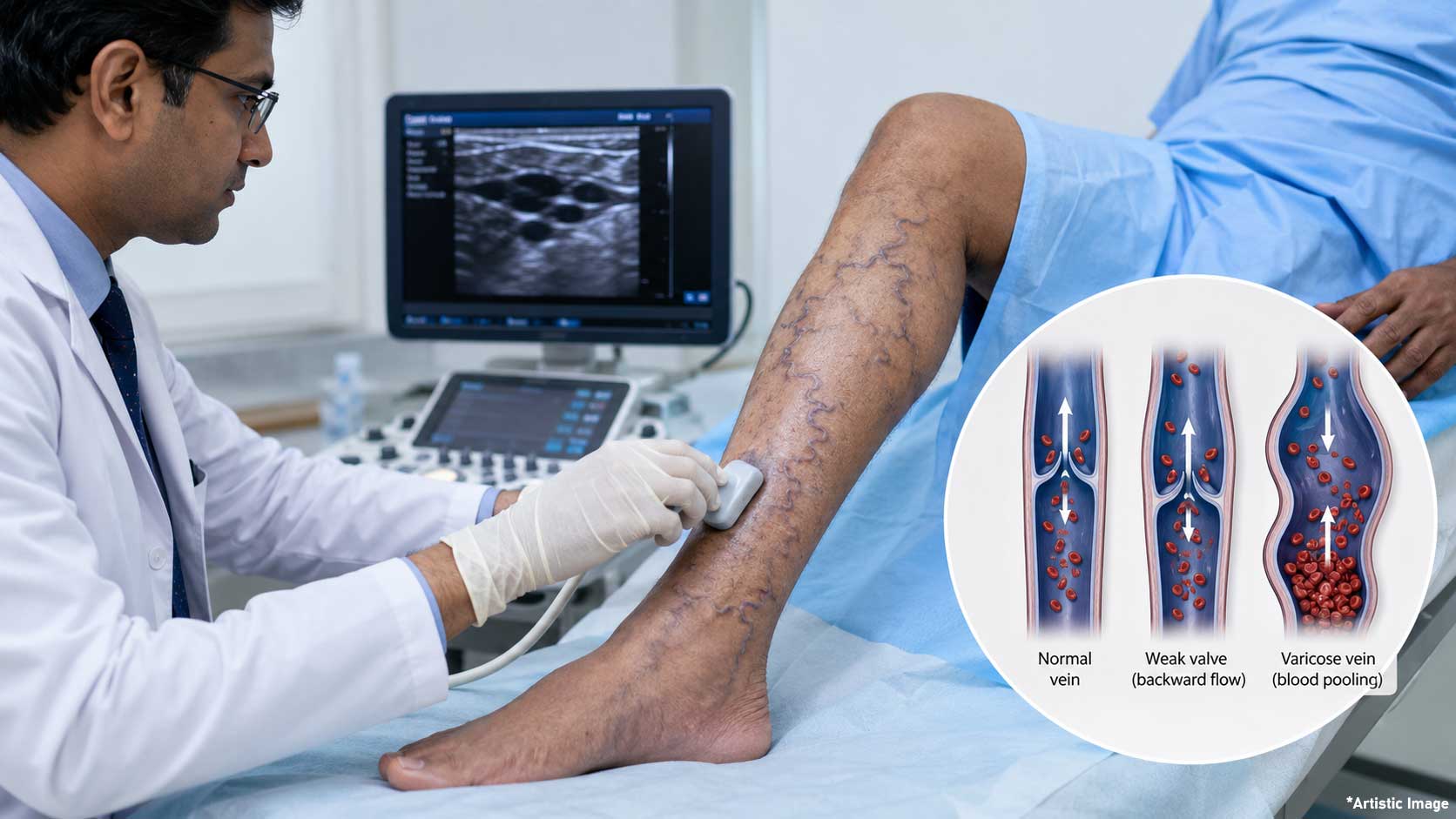
The cause of Varicose Veins is a malfunctioning of the valves in the veins. Normally, these valves help to keep blood flowing in the right direction, towards the heart. However, when they become weak or damaged, blood can flow backwards and pool in the veins, causing them to become swollen and twisted.
This backward flow, known as venous reflux, is the underlying mechanism behind nearly all cases of Varicose Veins, regardless of which risk factors contributed to it in any given individual.
Types of Varicose Veins
Not all Varicose Veins look or behave the same way. Trunk Varicose Veins are the large, prominent veins that run along the length of the leg, often visibly bulging and twisted — these are typically what people picture when they think of Varicose Veins.
Reticular veins are smaller, flatter, and often blue or green in color, sitting closer to the surface but not as raised as trunk Varicose Veins. They frequently appear alongside spider veins and can sometimes feed into larger Varicose Veins if left untreated.
Telangiectasia, more commonly known as spider veins, are the smallest type — fine, thread-like veins visible near the skin's surface. While related to Varicose Veins in cause, they are generally milder and less likely to cause significant symptoms.
Understanding which type of vein you're dealing with matters, as it directly influences which treatment approach — from sclerotherapy to laser therapy — is likely to be most effective.
How Varicose Veins Progress Over Time
Varicose veins typically don't appear overnight — they develop gradually, often over the course of several years. In the earliest stages, symptoms may be subtle: mild aching after a long day, slight swelling around the ankles by evening, or barely visible thread veins.
As venous insufficiency progresses, veins become more visibly enlarged and twisted, and symptoms like heaviness, cramping, and itching tend to intensify. Left unaddressed for years, the condition can eventually lead to skin changes, including discoloration and thickening around the lower leg and ankle.
In its most advanced stages, chronic venous insufficiency can result in complications such as venous ulcers or superficial blood clots. Understanding this progression underscores why early intervention — even at the mild, cosmetic-seeming stage — tends to lead to simpler, more effective treatment.
Risk Factors Revisited
There are several risk factors that can increase your chances of developing Varicose Veins. These include age, as the risk increases as you get older, as well as family history, being overweight or obese, and spending long periods of time standing or sitting.
While these core risk factors remain constant, it's worth noting that they often compound one another. For example, an individual with a family history of Varicose Veins who also has a job requiring prolonged standing faces a meaningfully higher cumulative risk than either factor would suggest on its own.
Recognizing the Symptoms
Symptoms of Varicose Veins can vary from person to person, but some common signs include swollen, twisted veins that are visible just under the surface of the skin, along with aching, heavy, or uncomfortable legs that often worsen as the day goes on.
Other frequent symptoms include itching or burning around the affected veins, muscle cramps or swelling in the lower legs — particularly at night — and skin changes, such as discoloration or thickening, in more advanced cases.
How Varicose Veins Are Diagnosed
If you are experiencing any of these symptoms, it is important to speak to your doctor. While Varicose Veins are usually not a serious health concern, they can sometimes lead to complications such as blood clots or ulcers, making an accurate diagnosis an important first step.
A vein specialist typically begins with a physical examination of the legs, both while standing and lying down, to assess the size, location, and pattern of the affected veins. This is usually followed by a Doppler ultrasound, a painless, non-invasive imaging test that maps blood flow and pinpoints exactly which veins and valves are affected.
This detailed assessment allows the specialist to determine the most appropriate treatment, whether that's lifestyle changes and compression therapy for mild cases, or a minimally invasive procedure such as laser therapy, radiofrequency ablation, or glue therapy for more significant veins.
Conclusion
Building on our earlier guide, understanding the different types of Varicose Veins, how the condition progresses, and what diagnosis involves gives a fuller picture of this common but often misunderstood condition. Recognizing symptoms early and seeking a proper evaluation remains the best way to prevent complications down the line.
If you're noticing any signs of Varicose Veins, don't wait for them to worsen — consult a qualified vein specialist for an accurate diagnosis and a treatment plan tailored to your specific condition.