
01
Why DVT Happens
DVT can develop due to medical conditions affecting blood clotting or prolonged immobility such as after surgery, injury, or extended bed rest.
Deep Vein Thrombosis (DVT) is a serious condition that occurs when a blood clot forms in a Vein located deep inside your body. In severe cases, the clot may travel to the lungs causing Acute Pulmonary Thromboembolism, a potentially fatal complication.
Persistent DVT can also lead to chronic leg swelling, ulcers, and the development of Varicose Veins. Early diagnosis and appropriate treatment can significantly reduce these risks.
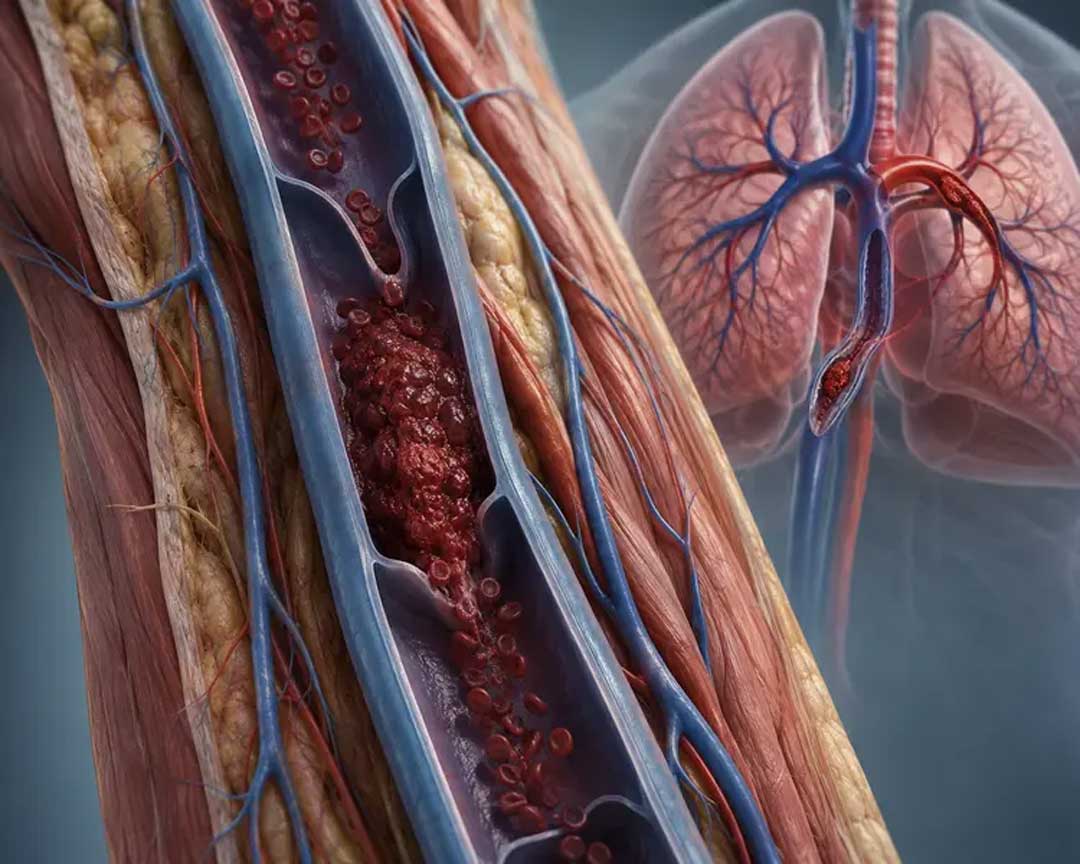
DVT requires timely medical attention because a clot can interfere with normal blood circulation and, in some cases, travel towards the lungs.
DVT can develop due to medical conditions affecting blood clotting or prolonged immobility such as after surgery, injury, or extended bed rest.
Severe DVT can be treated using interventional techniques. Clot-dissolving medication such as Urokinase may be delivered directly into the clot to help restore blood flow and reduce swelling.
When pulmonary embolism is present or highly likely, an IVC metal filter may be placed to help prevent clots from reaching the lungs.
Symptoms can vary from person to person. Recognising changes early can help in getting appropriate medical evaluation.
Swelling in one leg
Pain or tenderness while standing or walking
Warm skin over the affected area
Red or discoloured skin
Visible surface veins
Real patient cases demonstrating advanced approaches used in the diagnosis and treatment of Deep Vein Thrombosis.
A 30-year-old patient with post-pregnancy DVT was successfully treated using catheter-directed thrombolysis and balloon dilatation.
A life-saving IVC filter was placed to prevent clot migration in a patient with pulmonary embolism risk.
Catheter-directed thrombolysis restored full venous flow in an 18-year-old with chronic iliac Vein occlusion.