01
STEP 01
Ultrasound Mapping
The treatment starts with a duplex Ultrasound scan. This helps identify the source of venous reflux and checks whether Glue Therapy is suitable for the target Vein.
Catheter-based treatment
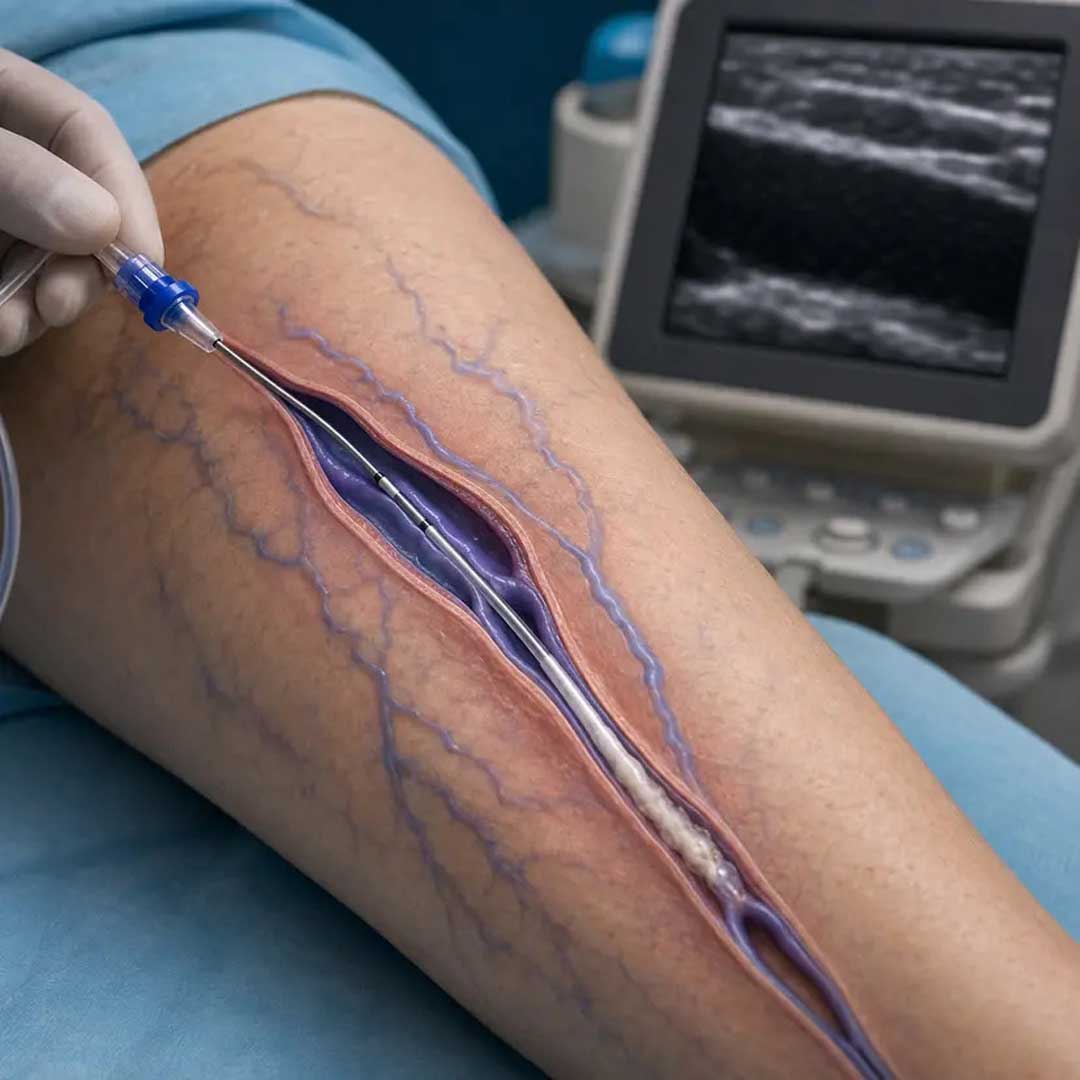
A minimally invasive treatment that uses medical adhesive to close problematic veins without laser or radiofrequency heat.
Glue Therapy is also known as cyanoacrylate adhesive Closure. It is used to treat selected veins affected by venous reflux.
A thin catheter delivers medical adhesive into the target Vein under Ultrasound guidance. The adhesive closes the Vein and allows blood to flow through healthier veins.
Uses medical adhesive instead of laser or radiofrequency heat to close the selected Vein.
The treatment is performed through a thin catheter instead of conventional surgical Vein removal.
Real-time Ultrasound helps the specialist map the Vein and guide the treatment accurately.
Varicose veins can develop when the valves inside superficial veins stop working properly. Blood may then flow backwards and collect in the veins.
This can contribute to visible veins, heaviness, swelling, aching and other symptoms.
Glue Therapy treats the underlying reflux by sealing a selected Vein from inside using medical adhesive.
Uses medical adhesive instead of thermal energy
Performed through a small catheter
Does not require conventional surgical Vein removal
Uses Ultrasound guidance
Designed for selected superficial veins
May allow a relatively quick return to routine activities
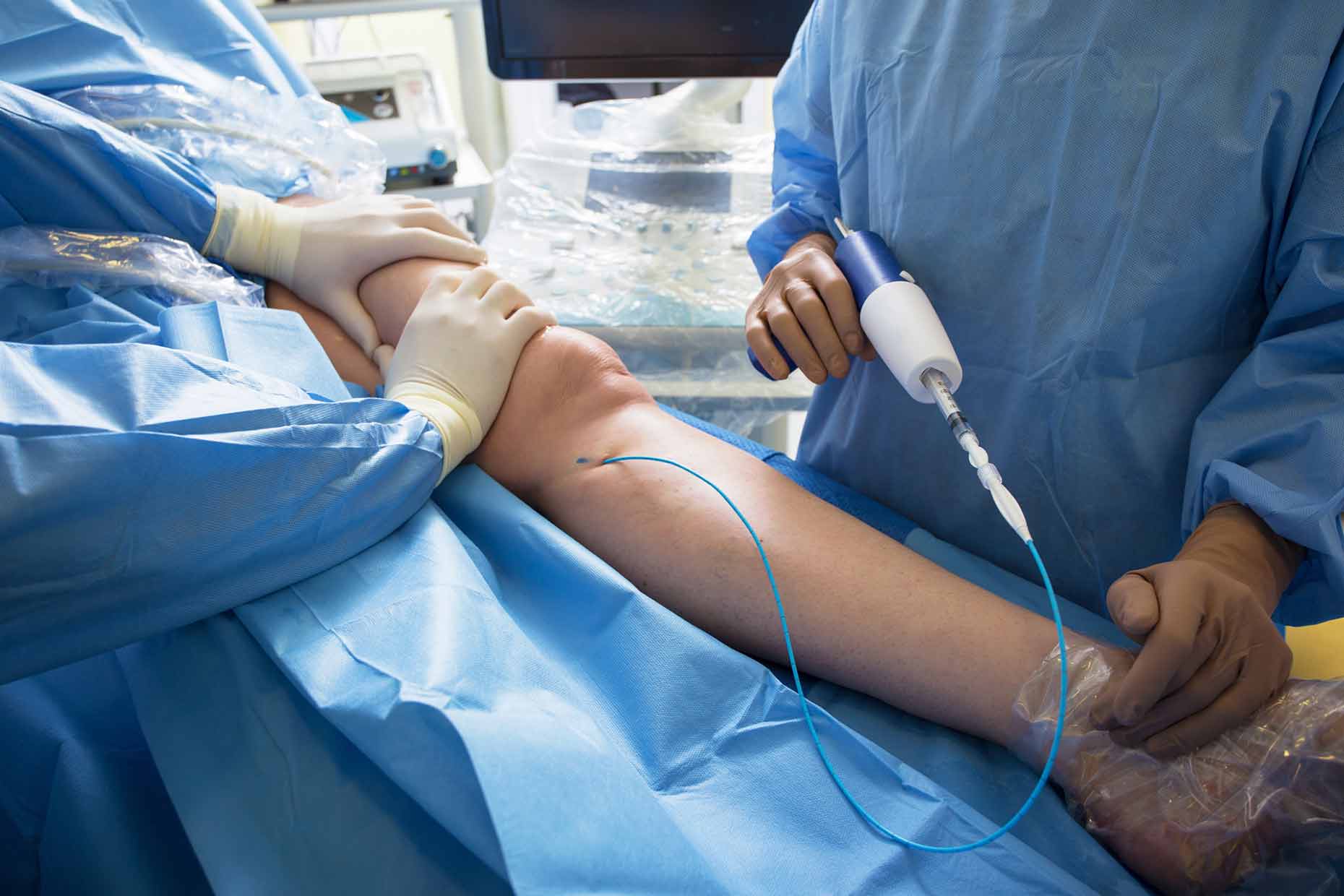
Medical adhesive is used to close the selected Vein instead of applying thermal energy.
Glue Therapy is an endovenous procedure for selected superficial veins affected by venous reflux.
Unlike heat-based treatments, it uses a specially formulated medical adhesive to close the target Vein.
During treatment, a thin catheter is placed inside the Vein. Ultrasound guidance helps the specialist deliver controlled amounts of adhesive to the target area.
The goal is to close the Vein responsible for abnormal reflux. Blood can then continue to flow through healthier veins.
Close the Vein responsible for abnormal reflux and allow blood to flow through healthier venous pathways.
Every treatment starts with an assessment. The exact technique, treatment time and aftercare plan depend on your Vein anatomy and clinical findings.
The treatment starts with a duplex Ultrasound scan. This helps identify the source of venous reflux and checks whether Glue Therapy is suitable for the target Vein.
A small amount of local anaesthetic is used near the catheter entry point. This helps keep the procedure comfortable while you remain awake.
A thin catheter is inserted into the selected Vein through a small access point. Ultrasound guidance helps the specialist place the catheter accurately.
Controlled amounts of medical adhesive are delivered through the catheter. Gentle pressure helps seal the treated section of the Vein.
After the Vein is closed, blood flows through healthier veins. The treated Vein then goes through a gradual healing process.
Glue Therapy closes veins in a different way from laser and radiofrequency treatments. Whether it is suitable depends on your symptoms, Ultrasound findings and Vein anatomy.
The target Vein is closed using medical adhesive instead of thermal energy. This makes Glue Therapy different from laser and radiofrequency ablation.
Treatment is performed through a small catheter rather than through conventional surgical Vein removal.
Real-time Ultrasound helps the specialist identify the Vein and guide the catheter accurately.
Treatment selection is based on your clinical assessment and detailed venous Ultrasound findings.
Not every varicose Vein needs the same treatment. The veins visible on the skin may be only one part of a larger problem.
A clinical examination and duplex Ultrasound can help find the veins responsible for abnormal blood flow.
These findings help the specialist decide whether Glue Therapy is suitable for you.
Other options may include laser ablation, radiofrequency ablation, sclerotherapy or a combination of treatments.
Patients with confirmed superficial venous reflux
Patients whose Vein anatomy is suitable for adhesive Closure
People looking for a non-thermal treatment option
Patients seeking a minimally invasive alternative to conventional surgery
Recovery depends on the treated Vein and the extent of venous disease. Your specialist will provide specific aftercare instructions for your treatment.
Light walking is generally encouraged after treatment, based on the specialist's instructions.
Many suitable patients can return to routine activities relatively quickly. Recovery times can vary from person to person.
A follow-up visit may include an Ultrasound scan to check the treated Vein and assess the result.
Aftercare advice about compression, exercise and other activities depends on your treatment and clinical findings.
A visible varicose Vein does not always show which Vein is causing the underlying reflux. Duplex Ultrasound provides important information for treatment planning.
It also helps the specialist choose the most appropriate treatment for each patient.
Clear answers to common questions about medical adhesive treatment for Varicose Veins.
Glue Therapy is a minimally invasive treatment that uses medical adhesive to close a selected Vein. Once the Vein is closed, blood is redirected through healthier veins.
No. Glue Therapy is a non-thermal treatment. It uses medical adhesive instead of laser or radiofrequency energy to close the target Vein.
No. The right treatment depends on your symptoms, clinical examination, duplex Ultrasound results and Vein anatomy. Glue Therapy is one of several treatment options for Varicose Veins.
Recovery varies between patients. Many suitable patients can return to routine activities relatively quickly. Your specialist will provide specific advice based on your treatment.
The treated Vein is intended to remain closed. However, Varicose Veins can involve several veins, and reflux may develop in another Vein. Long-term results depend on your underlying venous condition and anatomy.
Every patient's Vein anatomy is different. A consultation and duplex Ultrasound can help determine whether Glue Therapy or another treatment is appropriate for you.