Introduction
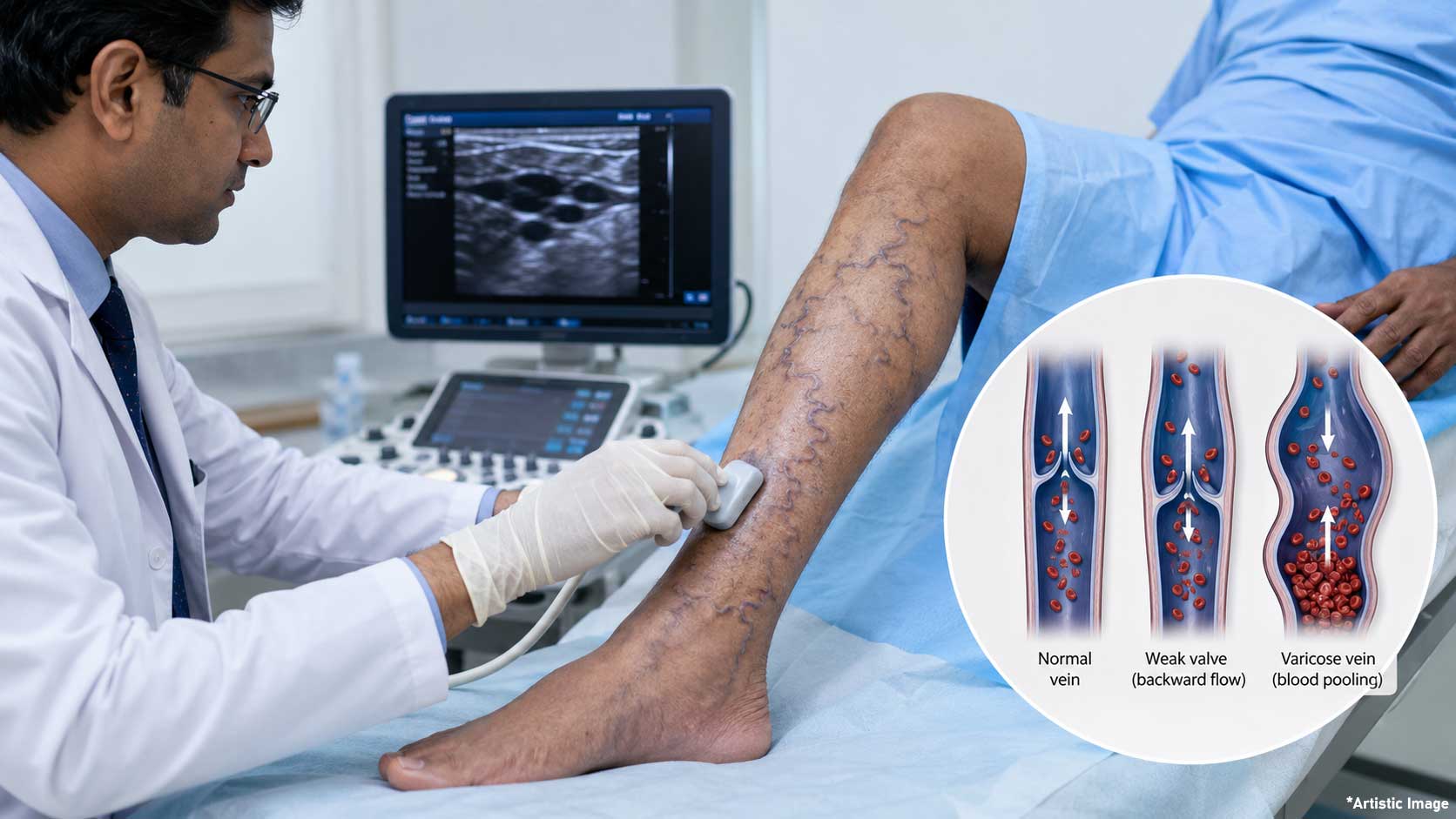
Varicose veins are swollen, twisted veins that often appear on the legs and feet. These veins are typically blue or dark purple in color and visibly bulge out from the surface of the skin. They develop when the valves within the veins become weak or damaged, preventing the smooth return of blood to the heart. As a result, blood pools inside the affected veins, causing them to stretch, enlarge, and twist over time.
While Varicose Veins are often dismissed as a purely cosmetic issue, they are, in fact, a sign of an underlying circulatory problem. Left unaddressed, this condition can progress and lead to discomfort, skin changes, and more serious vascular complications. Understanding the causes, symptoms, and risk factors associated with Varicose Veins is the first step toward timely diagnosis and effective management.
How Varicose Veins Develop
Veins contain small one way valves that keep blood flowing in a single direction upward, back toward the heart. When these valves weaken or become damaged, blood can flow backward and collect within the vein, a condition known as venous insufficiency. Over time, this pooled blood increases pressure inside the vein, causing it to stretch, bulge, and take on the twisted appearance associated with Varicose Veins.
Because veins in the legs must work against gravity to return blood to the heart, they are especially vulnerable to this kind of valve failure. This is why Varicose Veins are far more common in the legs and feet than in any other part of the body.
Causes of Varicose Veins
The primary causes of Varicose Veins include hereditary factors, aging, pregnancy, obesity, and a sedentary lifestyle. If your parents or close relatives have had Varicose Veins, your own risk of developing them is significantly higher, as vein wall strength and valve integrity are strongly influenced by genetics.
Aging naturally causes veins to lose elasticity, making valves more prone to weakening over time. Excess body weight adds extra pressure on the leg veins, while a sedentary lifestyle sitting or standing for long, uninterrupted periods reduces the efficiency of blood circulation in the lower limbs.
Individuals who spend long hours standing or sitting such as teachers, retail workers, and office employees are at greater risk, since prolonged immobility forces the leg veins to work harder against gravity for extended periods without the natural pumping action that walking provides.
Hormonal changes, especially in women during pregnancy or menopause, can also contribute to the weakening of vein walls and valves. Increased blood volume during pregnancy, combined with hormonal shifts that relax vein walls, explains why Varicose Veins are notably more prevalent among women than men.
Recognizing the Symptoms
Recognizing the symptoms of Varicose Veins early is crucial for timely intervention. Common signs include leg pain, a persistent feeling of heaviness, itching around the affected vein, muscle cramping (especially at night), and the visible appearance of twisted, rope like veins on the surface of the skin.
Many people also report throbbing or a burning sensation in the legs, particularly after standing for extended periods. Symptoms often worsen throughout the day and may feel more pronounced in warm weather.
In more severe cases, patients may experience swelling around the ankles, changes in skin color or texture, or even the development of ulcers near the ankles due to poor circulation. These advanced symptoms indicate that the condition has progressed and generally require prompt medical evaluation.
Potential Complications If Left Untreated
If Varicose Veins are left untreated, they can lead to complications such as chronic venous insufficiency, a long term condition in which the legs are unable to efficiently return blood to the heart. This can result in persistent swelling, skin thickening, and discoloration around the lower legs.
In some cases, prolonged blood pooling can also increase the risk of superficial thrombophlebitis (inflammation and clotting within the vein) or, less commonly, deeper blood clots. Chronic skin changes may eventually progress to venous ulcers, which can be slow to heal and prone to infection if not properly managed.
Because of these risks, Varicose Veins should never be viewed as a purely cosmetic concern. Early recognition and management can prevent the condition from advancing to these more serious stages.
Who Is Most at Risk?
While anyone can develop Varicose Veins, certain groups face a notably higher risk. Women are more commonly affected than men, largely due to hormonal factors related to pregnancy, menstruation, and menopause. Individuals over the age of 50, those who are overweight, and people with a family history of vein disease are also at increased risk.
Occupations that involve prolonged standing or sitting including healthcare workers, teachers, hairdressers, and office staff — further compound this risk. Additionally, a lack of regular physical activity reduces calf muscle strength, which plays an important role in helping push blood back up the legs toward the heart.
Lifestyle Modifications and Prevention
Fortunately, several lifestyle modifications can help prevent or manage the symptoms of Varicose Veins. Regular exercise, particularly walking and activities that engage the calf muscles, strengthens circulation and reduces pressure within the leg veins. Maintaining a healthy body weight also lessens the strain placed on the venous system.
Elevating the legs while resting encourages blood to flow back toward the heart with the help of gravity, offering relief from heaviness and swelling at the end of the day. Avoiding prolonged periods of standing or sitting without movement, and taking short walking breaks throughout the day, can also make a meaningful difference.
Compression stockings are a widely recommended, non invasive way to alleviate discomfort. These specially designed stockings apply gentle, graduated pressure to the legs, helping veins move blood more efficiently and reducing swelling and fatigue, particularly for those who stand for long hours at work.
When to See a Vein Specialist
While early stage Varicose Veins can often be managed through lifestyle changes, persistent symptoms such as ongoing pain, visible swelling, skin discoloration, or ulceration are signs that it's time to consult a vein specialist. A thorough clinical examination, often supported by a Doppler ultrasound scan, can accurately assess the extent of venous insufficiency and guide the most appropriate treatment path.
For those with more advanced cases, seeking consultation from a vein specialist is essential to explore treatment options. Modern vein care offers a range of minimally invasive procedures, including laser therapy, glue therapy, foam sclerotherapy, and radiofrequency ablation, each suited to different vein sizes and severity levels.
Newer techniques such as MOCA, microwave laser therapy, High Intensity Focused Ultrasound (HIFU), and steam ablation have also expanded the range of options available, offering patients effective, minimally invasive alternatives to traditional vein stripping surgery.
Conclusion
Understanding Varicose Veins their causes, symptoms, and underlying risk factors empowers individuals to take proactive steps in maintaining healthy veins and avoiding long-term vascular problems. Simple lifestyle changes, including regular exercise, weight management, and the use of compression stockings, can go a long way in preventing the condition from worsening.
With modern treatments available and increased awareness of vein health, it's now easier than ever to address this condition effectively. If you notice persistent symptoms or visible Varicose Veins, don't wait — a consultation with a qualified vein specialist can help you restore comfort, confidence, and long-term circulatory health.