Introduction
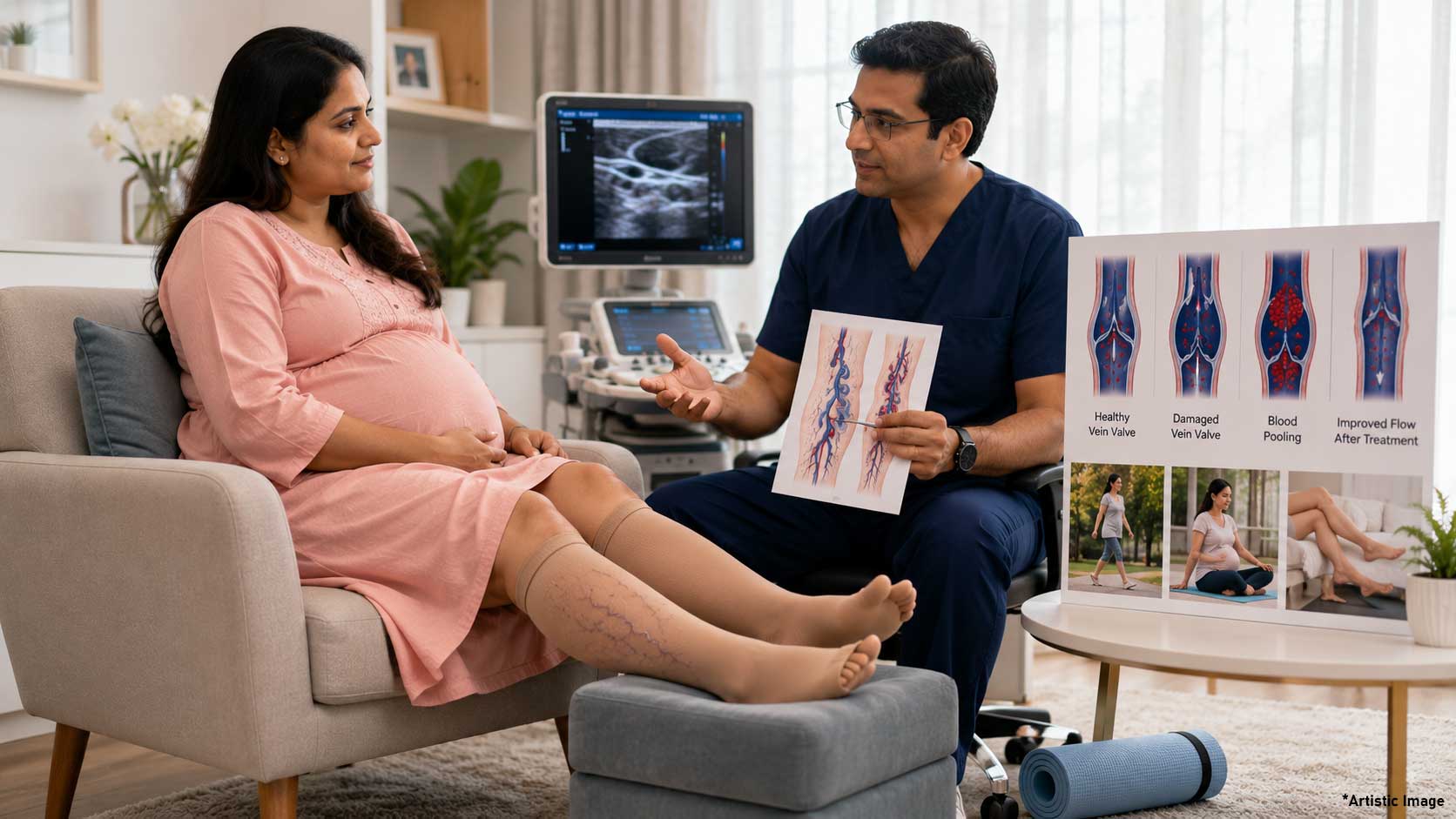
Varicose veins are a common condition that can occur during pregnancy. The changes in hormone levels and increased pressure on the veins can cause them to become swollen and twisted, particularly as the growing uterus places extra weight on the pelvic veins.
While Varicose Veins during pregnancy are usually not a serious health concern, they can cause discomfort and pain that affects daily life. Leading vein specialist in the country, Dr Shoaib Padaria, shares some tips for managing Varicose Veins during pregnancy, so expecting mothers can stay comfortable throughout this important time.
Why Pregnancy Increases the Risk of Varicose Veins
During pregnancy, the body produces higher levels of hormones such as progesterone, which relax the walls of blood vessels to accommodate increased blood volume. While this is a normal part of supporting the growing baby, it can also cause veins to weaken and stretch more easily than usual.
At the same time, the expanding uterus places additional pressure on the large vein in the pelvis responsible for returning blood from the legs to the heart. This combination of hormonal changes and increased physical pressure makes pregnant women significantly more prone to developing Varicose Veins, especially in the later stages of pregnancy.
Tips for Managing Varicose Veins During Pregnancy
It is important to avoid certain things during pregnancy if you have Varicose Veins. Following a few simple guidelines can help reduce discomfort and prevent symptoms from worsening as the pregnancy progresses.
Avoid Standing or Sitting for Long Periods of Time
Prolonged periods of standing or sitting can increase pressure on your veins, making Varicose Veins worse. Try to take frequent breaks and move around whenever possible, as even short bursts of movement help keep blood circulating efficiently through the legs.
Avoid High Heels
High heels can put added pressure on your veins, making Varicose Veins worse. Try to use comfortable, supportive shoes with a low heel instead, which allow the calf muscles to work more naturally and support healthy circulation.
Avoid Tight Clothing
Tight clothing, especially around the waist, groin, and legs, can restrict blood flow and increase your risk of developing Varicose Veins. Choose loose-fitting clothing that allows for proper circulation, particularly as your body changes throughout pregnancy.
Don't Cross Your Legs
Crossing your legs can restrict blood flow and increase your risk of developing Varicose Veins. Try to keep your feet elevated or flat on the ground whenever possible, especially during long periods of sitting.
Exercise Regularly
Regular physical activity can help to improve circulation in your legs and reduce your risk of developing Varicose Veins. Try low-impact exercises such as walking, yoga, or swimming, which are generally considered safe throughout pregnancy and support healthy blood flow without straining the body.
Elevate Your Legs
If you spend long periods of time sitting or standing, try to elevate your legs whenever possible. This can help to improve circulation and reduce your risk of developing Varicose Veins, and offers welcome relief at the end of a long day.
Wear Compression Stockings
Compression stockings can help to improve circulation in your legs and reduce your risk of developing Varicose Veins. They work by squeezing your legs and helping blood to flow more efficiently, and many pregnant women find them especially helpful in the later trimesters.
What Happens to Varicose Veins After Pregnancy?
For many women, Varicose Veins that develop during pregnancy improve on their own within a few months after delivery, as hormone levels return to normal and pressure on the pelvic veins is relieved. However, in some cases, veins may not fully resolve, particularly after multiple pregnancies.
If Varicose Veins persist well after childbirth and continue to cause symptoms, it's worth consulting a vein specialist to discuss treatment options, since postpartum treatment can often be approached with a wider range of therapies than during pregnancy itself.
When to Consult a Specialist
While most pregnancy-related Varicose Veins are manageable with the lifestyle tips above, it's important to consult your doctor if you experience severe pain, sudden swelling, redness, or warmth in the leg, as these can occasionally indicate more serious circulatory issues that require prompt attention.
Your obstetrician or a vein specialist can guide you on the safest approach to managing symptoms during pregnancy, and can advise on appropriate treatment timing if intervention is needed after delivery.
Conclusion
By following these tips and working closely with your doctor, you can manage Varicose Veins during pregnancy and enjoy a healthy, comfortable pregnancy. Simple changes to daily habits—from footwear to movement breaks—can make a meaningful difference in easing symptoms.
If Varicose Veins persist or worsen after pregnancy, talking to a Vein Specialist like Dr. Shoaib Padaria can help you explore the most suitable treatment options for long-term relief.