Introduction
Varicose veins affect millions of people worldwide and are more than just a cosmetic concern. These enlarged, twisted veins often appear on the legs and can lead to symptoms such as aching, heaviness, swelling, muscle cramps, and fatigue. If left untreated, they may progress into more serious complications, including skin discoloration, ulcers, or blood clots.
Fortunately, advances in medical technology have transformed the way Varicose Veins are treated. Among the most effective options available today is laser treatment, a minimally invasive procedure that offers excellent clinical and cosmetic outcomes. Unlike traditional surgery, laser treatment requires no major incisions, causes minimal discomfort, and allows patients to return to their daily routine quickly.
What Are Varicose Veins?
Varicose veins develop when the valves inside the veins become weak or damaged. Normally, these valves ensure that blood flows upward toward the heart. When they fail to function properly, blood begins to pool inside the veins, causing them to enlarge and become visibly twisted.
Although Varicose Veins can occur in different parts of the body, they are most commonly found in the legs because they experience the greatest pressure while standing and walking. Genetics, aging, pregnancy, obesity, prolonged standing, and a sedentary lifestyle all increase the risk of developing this condition.
How Laser Treatment Works
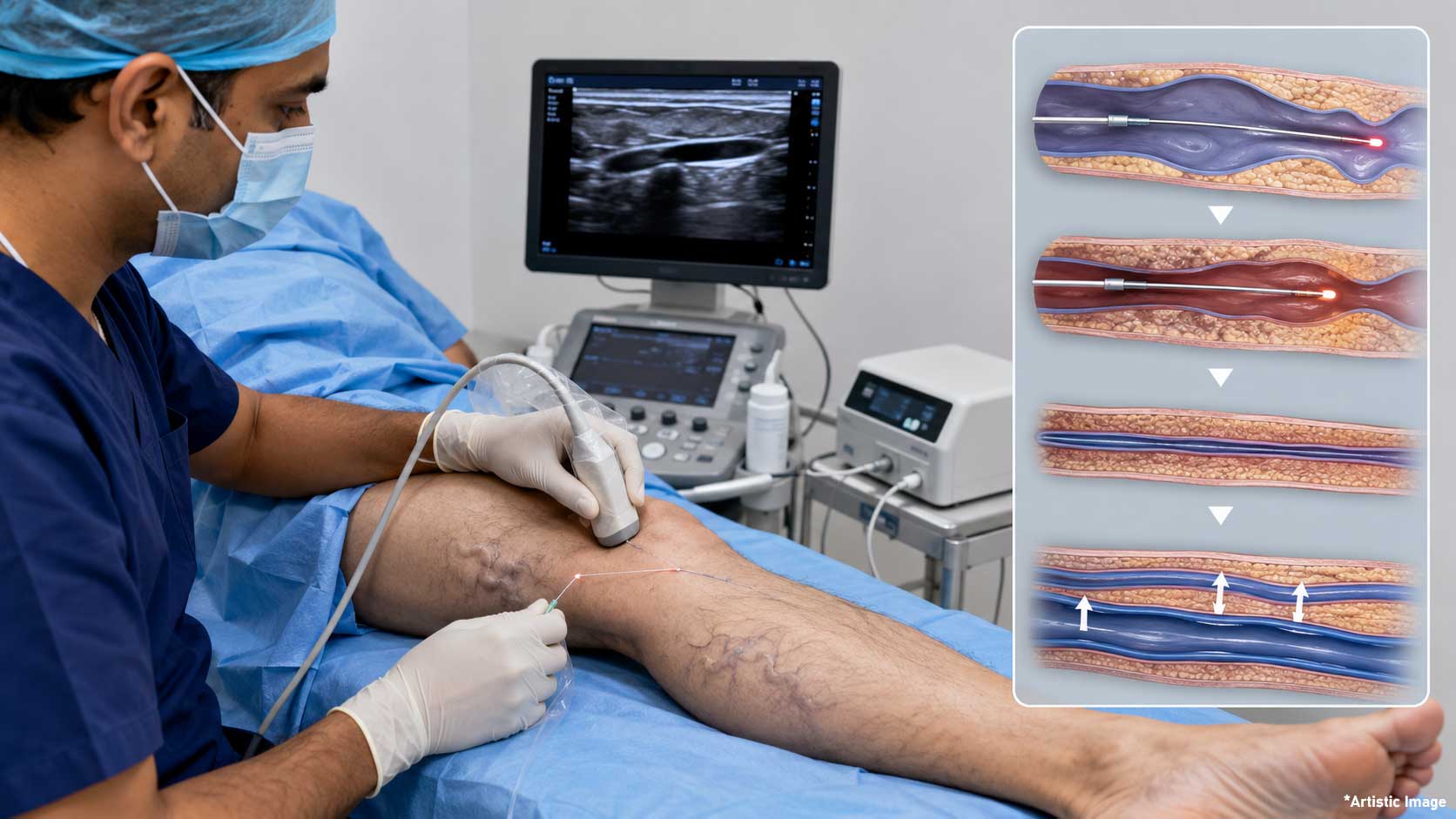
Laser treatment uses concentrated beams of light energy to target damaged veins. The laser generates heat, which damages the inner lining of the affected vein. As a result, the vein collapses, seals shut, and gradually gets absorbed by the body over the following weeks or months.
Once the unhealthy vein is closed, blood is automatically redirected through nearby healthy veins. This restores efficient blood circulation, relieves uncomfortable symptoms, and improves the overall appearance of the legs without affecting normal blood flow.
Types of Laser Treatments
There are two primary forms of laser therapy used to treat Varicose Veins. The choice depends on the size, depth, and severity of the affected veins.
Simple Surface Laser Treatment is used for tiny Varicose Veins and spider veins located close to the skin. During this procedure, laser energy is delivered externally without making any incisions. Multiple sessions may be required for optimal cosmetic results.
Endovenous Laser Therapy (EVLT) is designed for larger and deeper Varicose Veins. Under ultrasound guidance, a thin laser fiber is inserted into the affected vein through a tiny puncture. Laser energy is then delivered from inside the vein, causing it to seal completely. EVLT has become the gold standard for treating larger Varicose Veins due to its high success rate and quick recovery.
Step-by-Step Procedure
Before treatment, the vein specialist performs a detailed clinical examination and a Doppler ultrasound scan to identify the damaged veins and assess blood flow. This helps create a personalized treatment plan.
On the day of the procedure, the treatment area is cleaned and local anesthesia is administered. For EVLT, a thin catheter carrying the laser fiber is inserted into the affected vein through a tiny puncture. The laser energy is delivered while the fiber is slowly withdrawn, sealing the vein from within.
Once the treatment is complete, the catheter is removed, and a small dressing is applied. Since no large surgical cuts are involved, stitches are generally unnecessary. Patients are encouraged to walk immediately after the procedure to promote healthy circulation.
Benefits of Laser Treatment
Laser treatment offers several advantages over traditional vein stripping surgery. It is minimally invasive, requires only local anesthesia, and involves very little discomfort. Most procedures are completed within 30 to 60 minutes.
Patients experience significantly less pain, minimal bruising, and almost no scarring. Since healthy veins continue to carry blood efficiently, circulation improves naturally after the treated vein closes. Most individuals return to work and regular daily activities within one or two days.
From a cosmetic perspective, laser therapy delivers excellent results. As the treated vein gradually disappears, the legs regain a smoother and healthier appearance. Many patients also notice immediate improvement in symptoms such as heaviness, swelling, burning sensations, and nighttime cramps.
Recovery After Laser Treatment
Recovery following laser treatment is usually quick and comfortable. Patients are advised to wear compression stockings for a few days or weeks, depending on the doctor's recommendation. Walking is encouraged immediately after the procedure, while strenuous exercise and heavy lifting should be avoided temporarily.
Mild soreness, tightness, or bruising may occur but generally resolves within a few days. Follow-up ultrasound examinations are often scheduled to ensure that the treated vein has closed successfully and normal blood flow has been restored.
Who Is an Ideal Candidate?
Laser treatment is suitable for most individuals suffering from symptomatic Varicose Veins. It is especially recommended for patients who experience persistent leg pain, swelling, heaviness, itching, skin discoloration, or visible bulging veins.
A Doppler ultrasound evaluation helps determine whether laser therapy is the right treatment option. Factors such as vein size, location, overall health, and the severity of venous insufficiency influence the treatment decision.
Possible Risks and Side Effects
Laser treatment is considered extremely safe when performed by an experienced vascular specialist. However, like any medical procedure, minor side effects may occur, including temporary bruising, mild swelling, numbness, or skin discoloration near the treatment site.
Serious complications are rare. Following your doctor's post-treatment instructions significantly reduces the risk of infection, blood clots, or recurrence.
Long-Term Results
Clinical studies have shown that Endovenous Laser Therapy (EVLT) achieves success rates exceeding 95% in properly selected patients. Most treated veins remain permanently closed, providing long-lasting relief from symptoms.
While treated veins do not return, new Varicose Veins can develop over time due to aging, genetics, or lifestyle factors. Maintaining a healthy weight, exercising regularly, avoiding prolonged standing, and wearing compression stockings when recommended can help reduce future risk.
Why Choose Laser Treatment Over Traditional Surgery?
Compared to conventional vein stripping surgery, laser treatment offers numerous advantages. There are no major incisions, significantly less pain, shorter recovery time, minimal scarring, lower risk of complications, and excellent cosmetic outcomes.
Most importantly, patients can return to normal life almost immediately, making laser treatment an ideal option for working professionals and individuals seeking an effective, non-surgical solution.
Conclusion
Laser treatment has revolutionized the management of Varicose Veins by providing a safe, minimally invasive, and highly effective alternative to traditional surgery. Whether you are seeking relief from pain, swelling, or the cosmetic appearance of enlarged veins, laser therapy offers a proven solution with minimal downtime.
If you have been experiencing symptoms of Varicose Veins, consult a qualified vein specialist for a thorough evaluation. Early diagnosis and timely treatment can improve circulation, prevent complications, and restore both the health and appearance of your legs for years to come.