
Understanding Gangrene
Gangrene is the localized death of body tissue caused by obstructed blood circulation or severe bacterial infection. Without timely treatment, it can become life-threatening and may require amputation.
15-40x
Higher amputation risk in diabetics30-40%
Amputations linked to diabetesMedical Emergency
Requires immediate evaluationWhy Early Detection Matters
- Prevents tissue death
- Reduces amputation risk
- Stops infection spread
- Improves recovery outcomes
What Causes Gangrene?
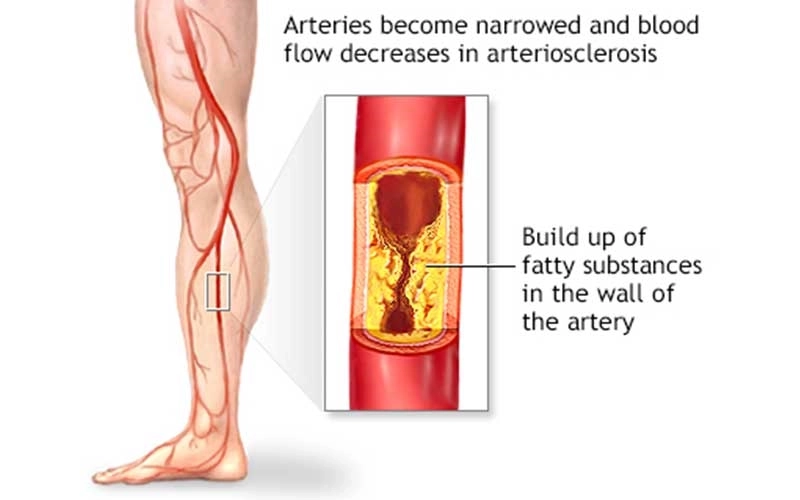
The majority of cases occur due to vascular disease. When arteries become narrowed or hardened, blood flow decreases drastically — starving tissues of oxygen.
Connection With Diabetes
Diabetes damages blood vessels and nerves, often causing loss of protective sensation. Small wounds can develop into ulcers and serious infections without being noticed.
When Does It Become Dangerous?
If untreated, infection may spread into the bloodstream and threaten life. In severe cases, amputation becomes the only safe option.
Know The Progression
Stage 1 — Reduced Blood Flow
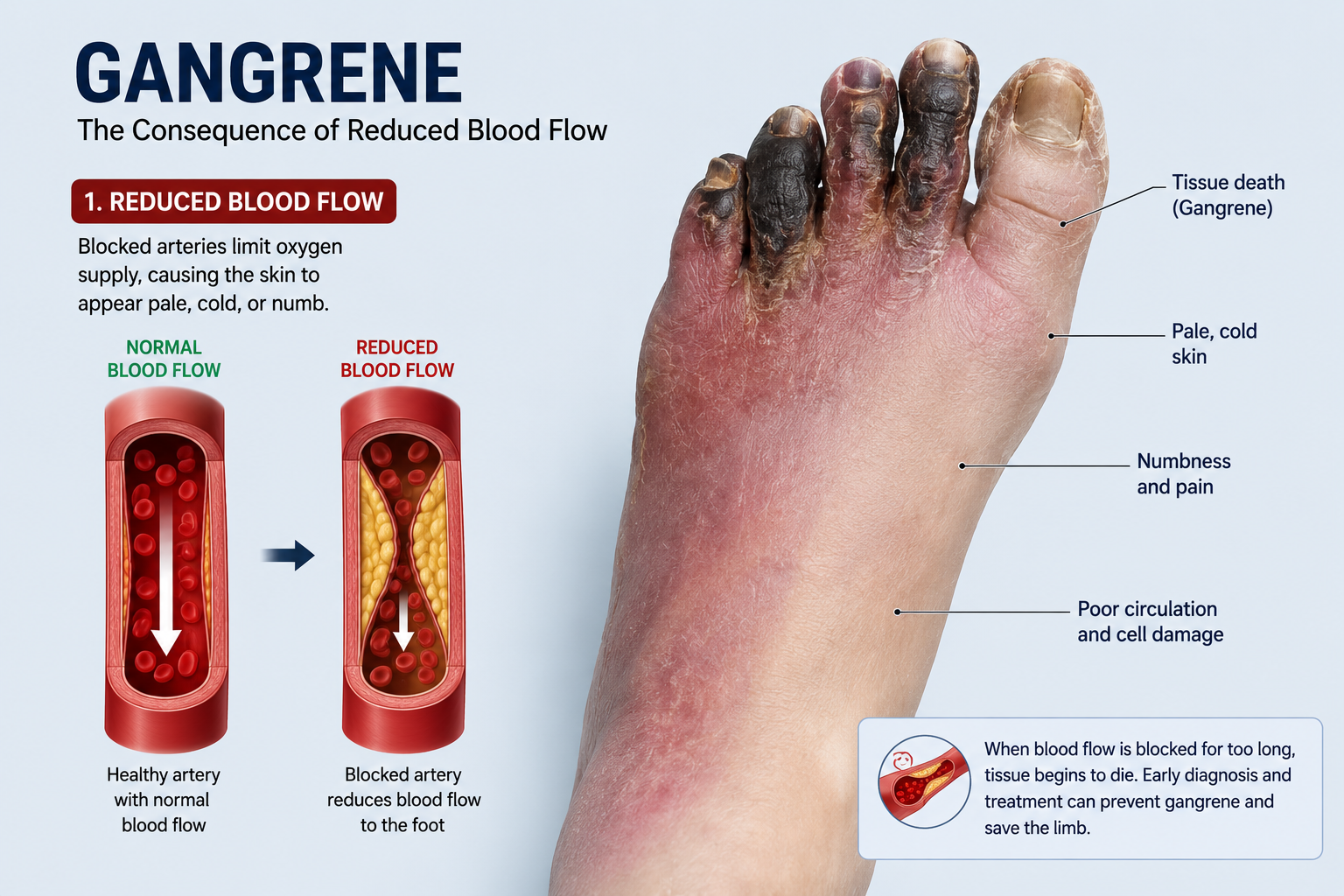
Blocked arteries limit oxygen supply, causing the skin to appear pale, cold, or numb.
Stage 2 — Tissue Damage
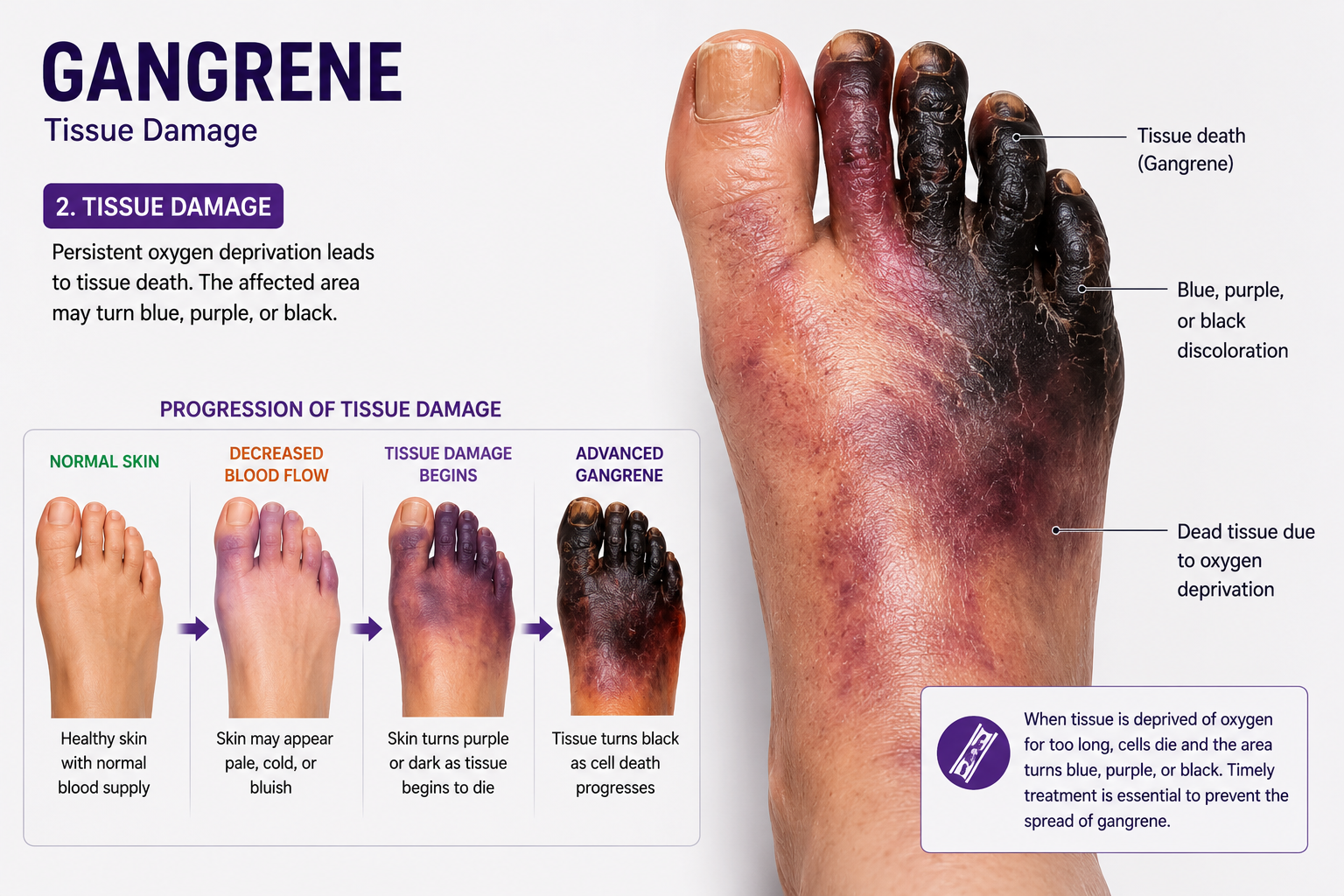
Persistent oxygen deprivation leads to tissue death. The affected area may turn blue, purple, or black.
Stage 3 — Infection Risk
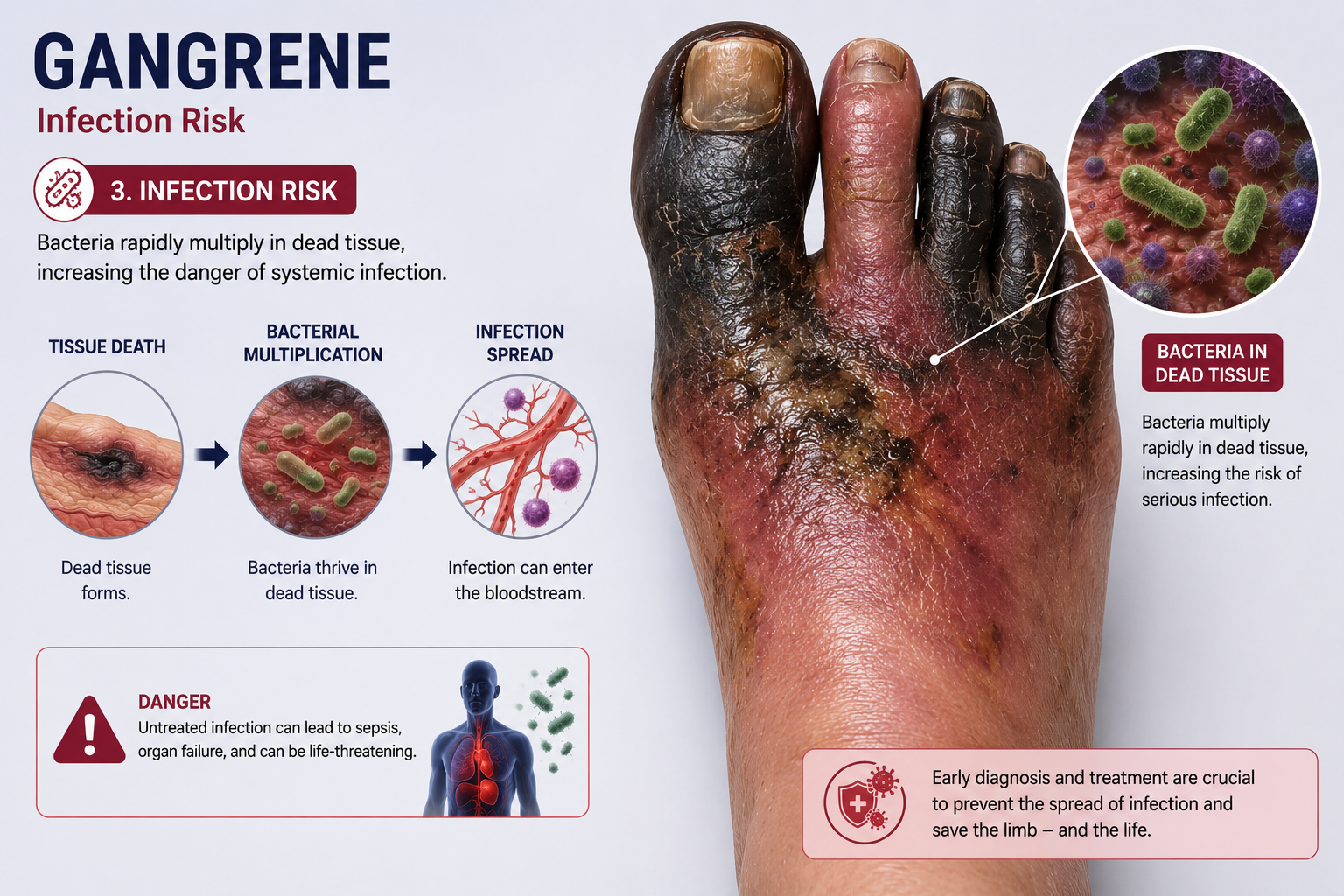
Bacteria rapidly multiply in dead tissue, increasing the danger of systemic infection.
Stage 4 — Limb Threat
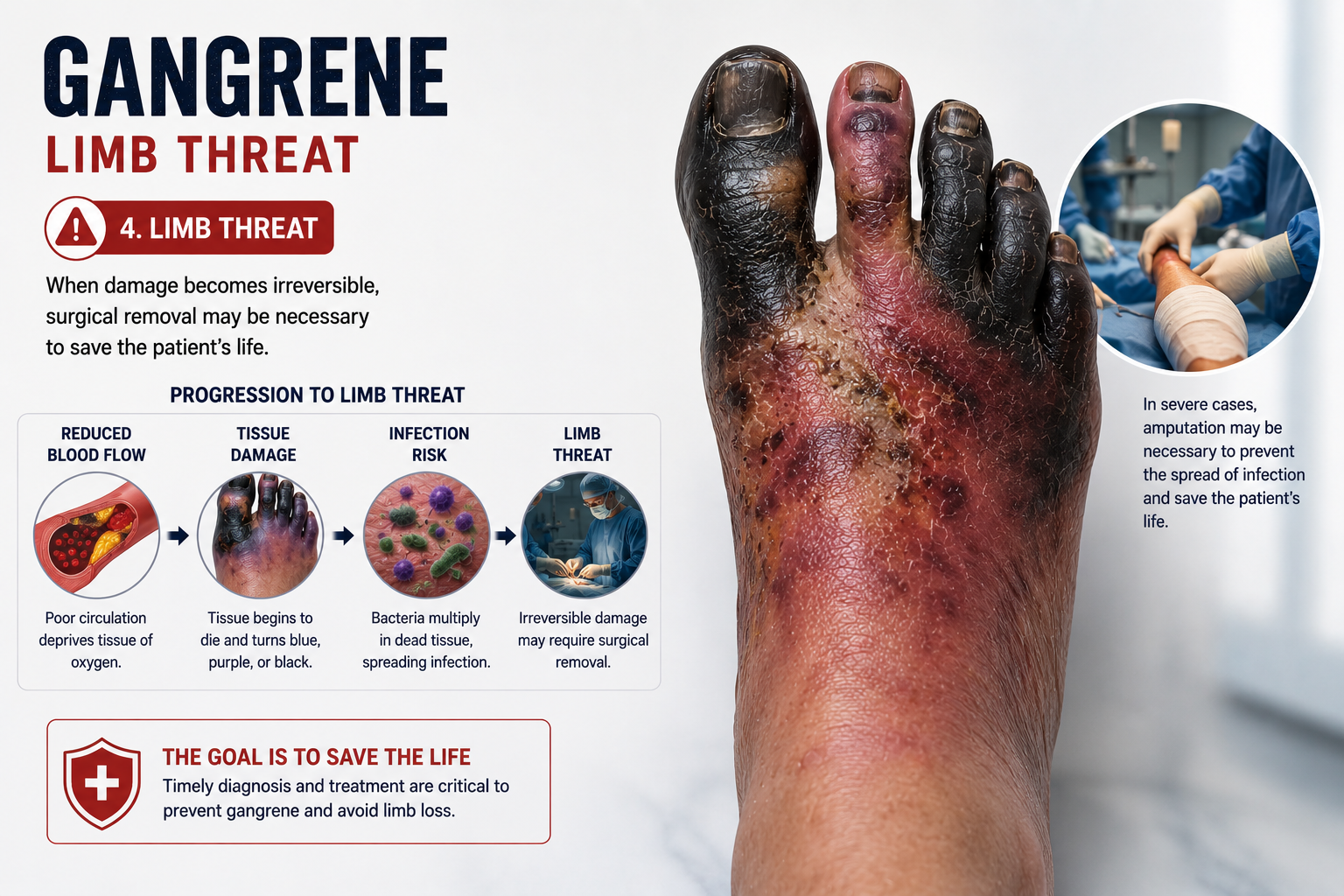
When damage becomes irreversible, surgical removal may be necessary to save the patient’s life.
⚠️ Gangrene Is Preventable With Early Care
Amputation should always be the last resort — attempted only after every possible treatment has been exhausted. Early diagnosis dramatically improves outcomes.
How to Prevent Gangrene
Gangrene develops when tissues lose blood supply. Early detection, proper treatment, and advanced vascular procedures can restore circulation and help save the limb.
Recognize The Early Warning Signs
Leg Pain While Walking
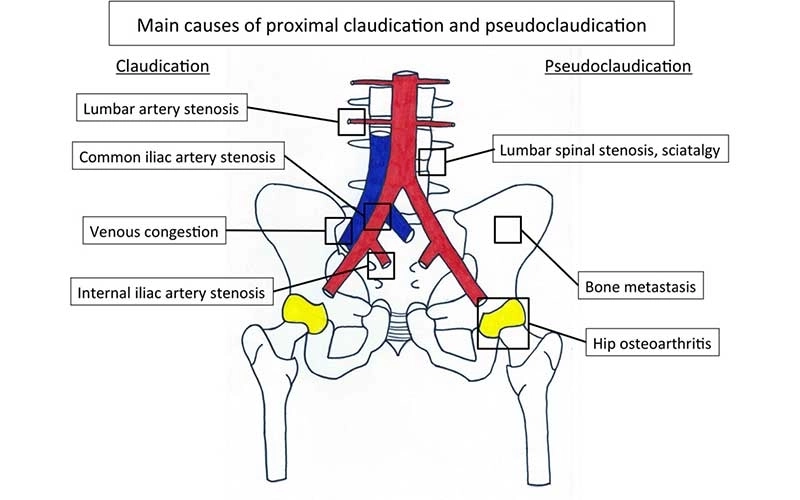
Pain that reduces when you stop walking is called intermittent claudication. It signals reduced blood supply to your leg muscles.
Reduced Walking Distance
As artery blockages worsen, the distance you can walk comfortably becomes shorter.
Pain Even At Rest
Severe narrowing may cause constant pain — a serious indicator that circulation is critically low.
Tissue Damage
Complete blockage can cause tissue death, leading to gangrene if not treated urgently.
How Doctors Prevent Gangrene Progression
Medication (Early Stage)
Medicines such as Pentoxyphylline and Cilostazol improve blood flow and oxygen delivery to tissues.
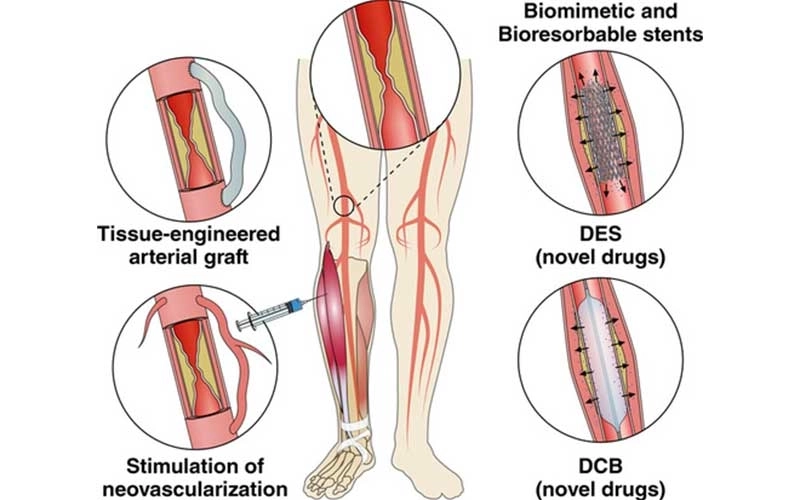
Balloon Angioplasty & Stenting
Minimally invasive procedures reopen blocked arteries, restoring circulation without major surgery.
Bypass Surgery
When interventional techniques aren’t feasible, surgeons create a new pathway for blood flow.
Hyperbaric Oxygen Therapy
Breathing pure oxygen in a pressurized chamber increases oxygen delivery to damaged tissues, promoting healing.
Advanced Procedures That Restore Blood Flow
Why Early Treatment Matters
Once gangrene develops, dead tissue must be surgically removed. The goal of treatment is always to restore circulation quickly and preserve as much of the limb as possible preventing major amputation whenever we can.