
Carotid Angioplasty
A minimally invasive procedure designed to prevent stroke and restore healthy blood flow to the brain.
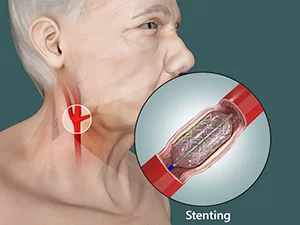
Understanding Carotid Angioplasty
What is Carotid Artery Stenting?
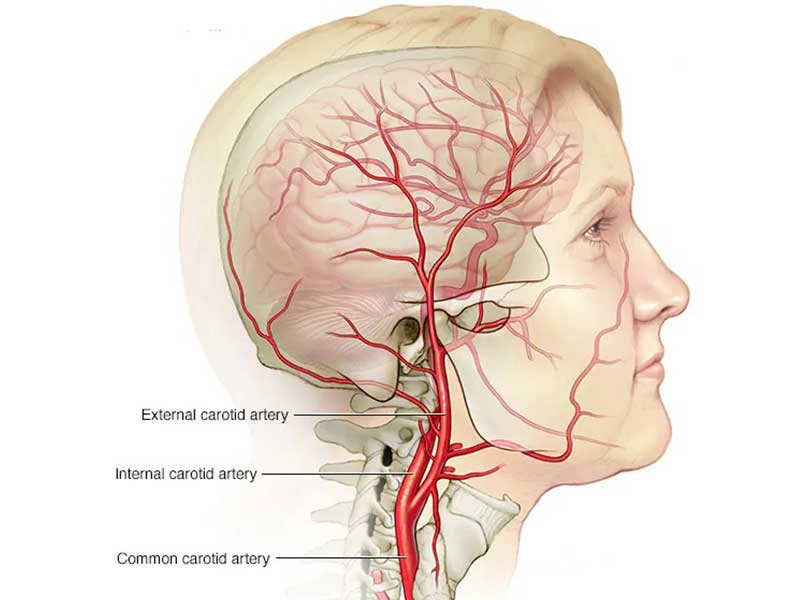
It is a procedure used to open narrowed carotid arteries. Stroke is a brain attack and a leading cause of paralysis and death worldwide.
Why Stroke Happens
Stroke occurs due to brain hemorrhage (bleeding) or embolism (clot blocking blood flow). Lipid deposits from carotid arteries may travel to the brain causing blockage.
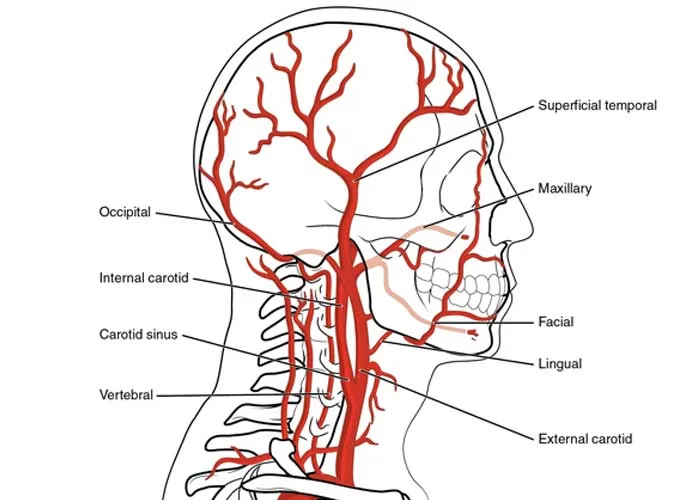
Symptoms of Artery Narrowing
Warning Signs
- Temporary one-sided weakness
- Numbness in face or limbs
- Slurred speech
- Temporary vision loss
- Loss of balance
- Sudden giddiness or blackout feeling
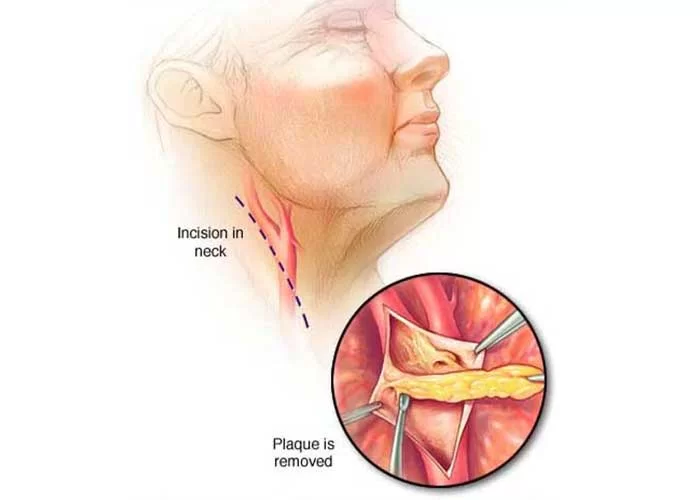
Diagnosis & Risk Level
Diagnosis
- Detailed symptom history
- Carotid pulse examination
- Color Doppler ultrasound study
How Dangerous Is It?
Patients with >75% narrowing have 2–5% yearly stroke risk without symptoms and over 12–13% risk when symptoms are present.
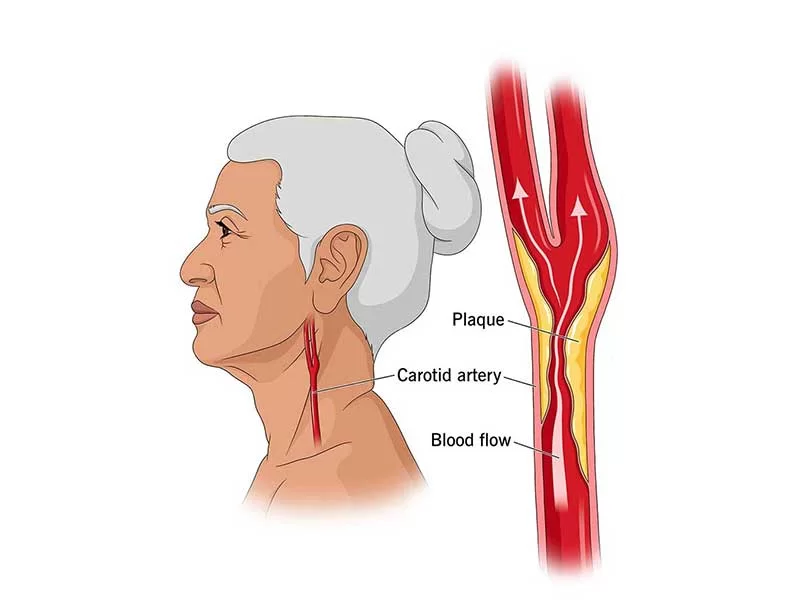
Carotid Angioplasty Treatment
Procedure
A minimally invasive technique opens blocked arteries without surgery. A stent is placed to prevent restenosis.
When Recommended
- >75% stenosis in asymptomatic patients
- >60% stenosis in symptomatic patients
Advantages & Clinical Outcomes
Advantages Over Surgery
- Performed under local anesthesia
- Suitable for elderly & high-risk patients
- 30–60 minute procedure
- Next-day discharge
- No cuts or stitches
- Lower complication risk
Case Study Insight
Clinical outcomes demonstrate improved blood flow and significantly reduced stroke risk following carotid angioplasty.